
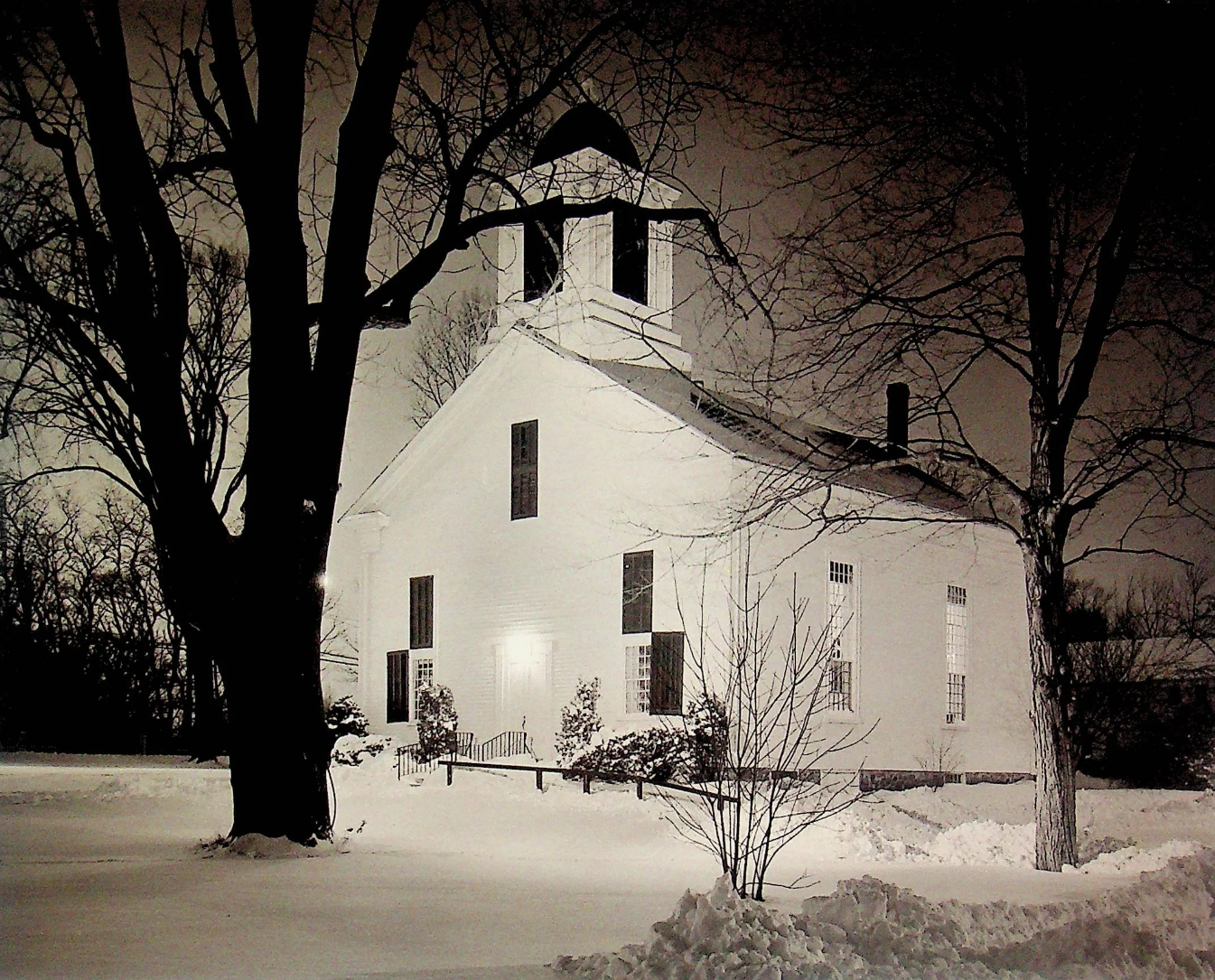
Visit our historic site to see local history
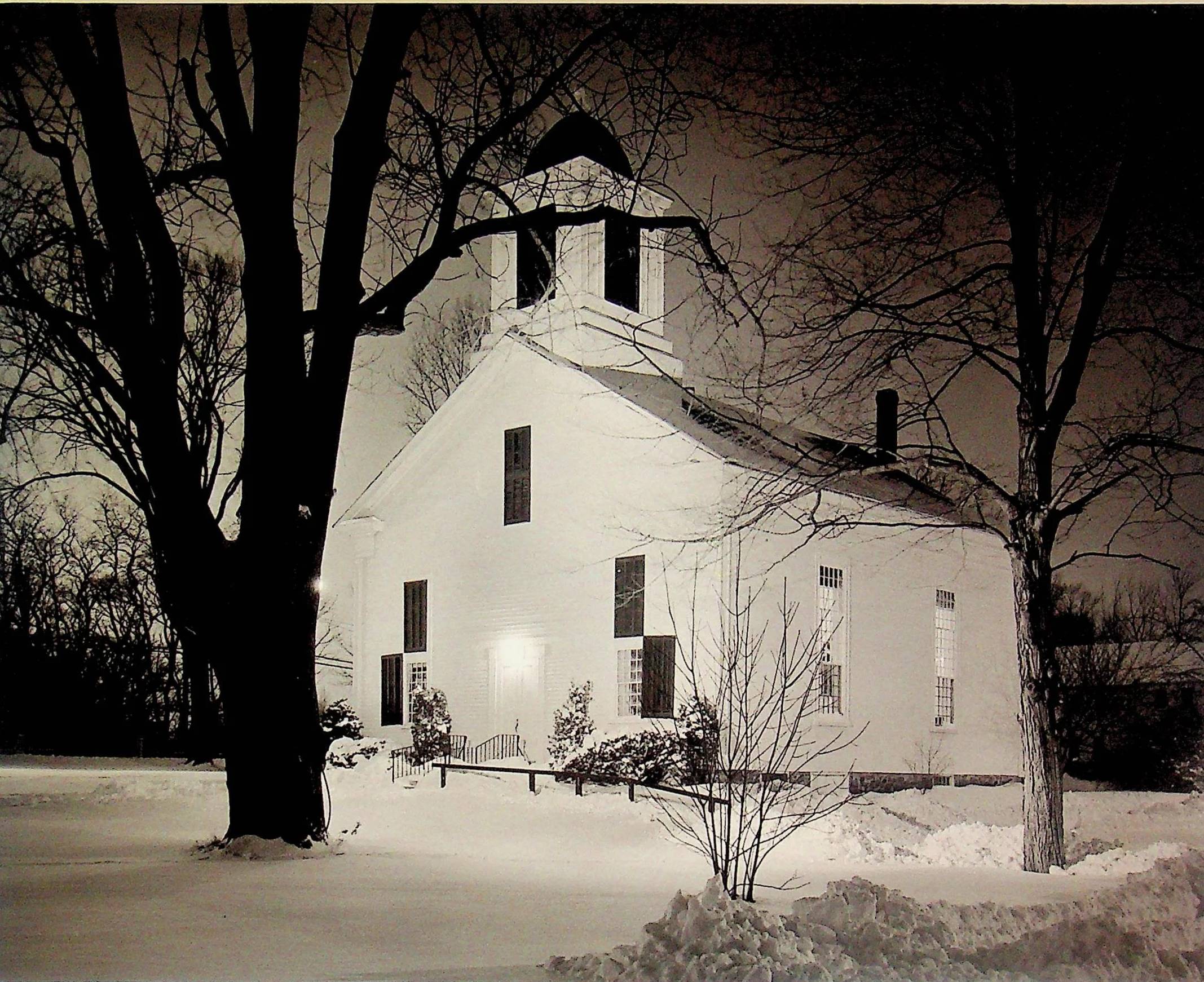
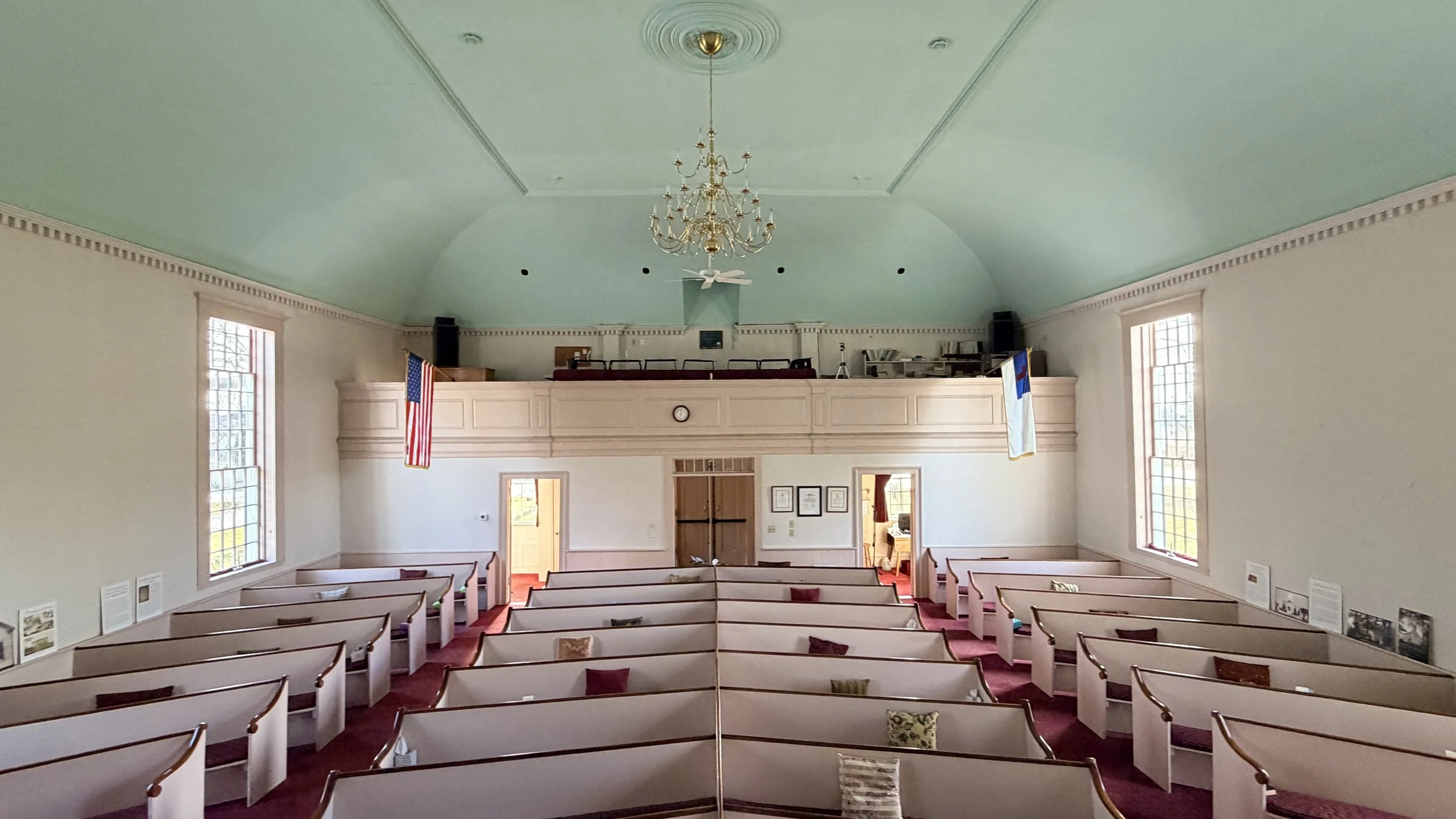
The First Congregational Church of Kittery is considered by many to be the oldest church in Maine and is certainly the oldest church continuously operating as a church in Maine.
The 1730 Church, the 1729 Parish House (aka the Olde Parsonage), and the Old Burying Ground are all listed on the National Register of Historic Places.
The history is long and fascinating, and below provides an overview of some of the more interesting events and people. Much more can be learned by visiting.
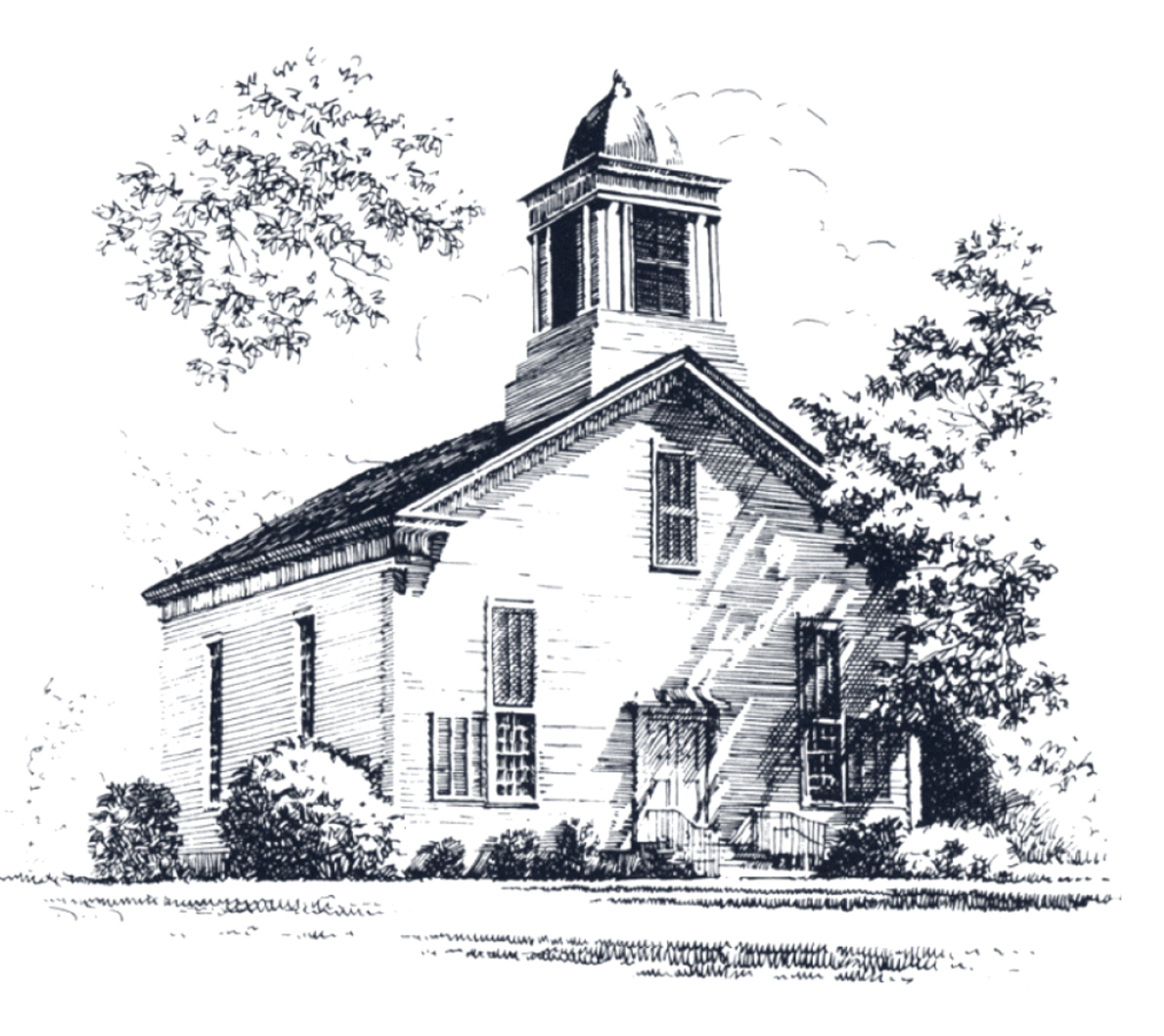
Our story through time
Click on a button below to take you to a section to read more.
THE founding
-
This region became part of Massachusetts through an Act of Submission. Along with protection from natives, voting rights, and titled lands came required religion. Mainers were ordered to provide a meeting house and preacher in every town. Despite this order, the town of Kittery was brought to court more than once for not having a suitable building.
-
A group of 18 men and 25 women successfully petitioned the Massachusetts Court for permission to organize a church. On November 4, 1714, a covenant and confession of faith written by the Rev. Newmarch was signed by all 43 petitioners.
Mr. Newmarch was ordained and installed as pastor that day and served for 60 years, until his death in 1754. During that time he baptized an amazing 1,796 people, including William Whipple a future signer of the Declaration of Independence.
-
1727 a new meeting house was built, after much debate, and paid for largely through subscription by well-to-do members including both Pepperrells,Timothy Gerrish, Elisha Gunnison, and Robert Cutt.
The same year a ferryman was hired to bring people across the creek to church, a position that continued for over 100 years.
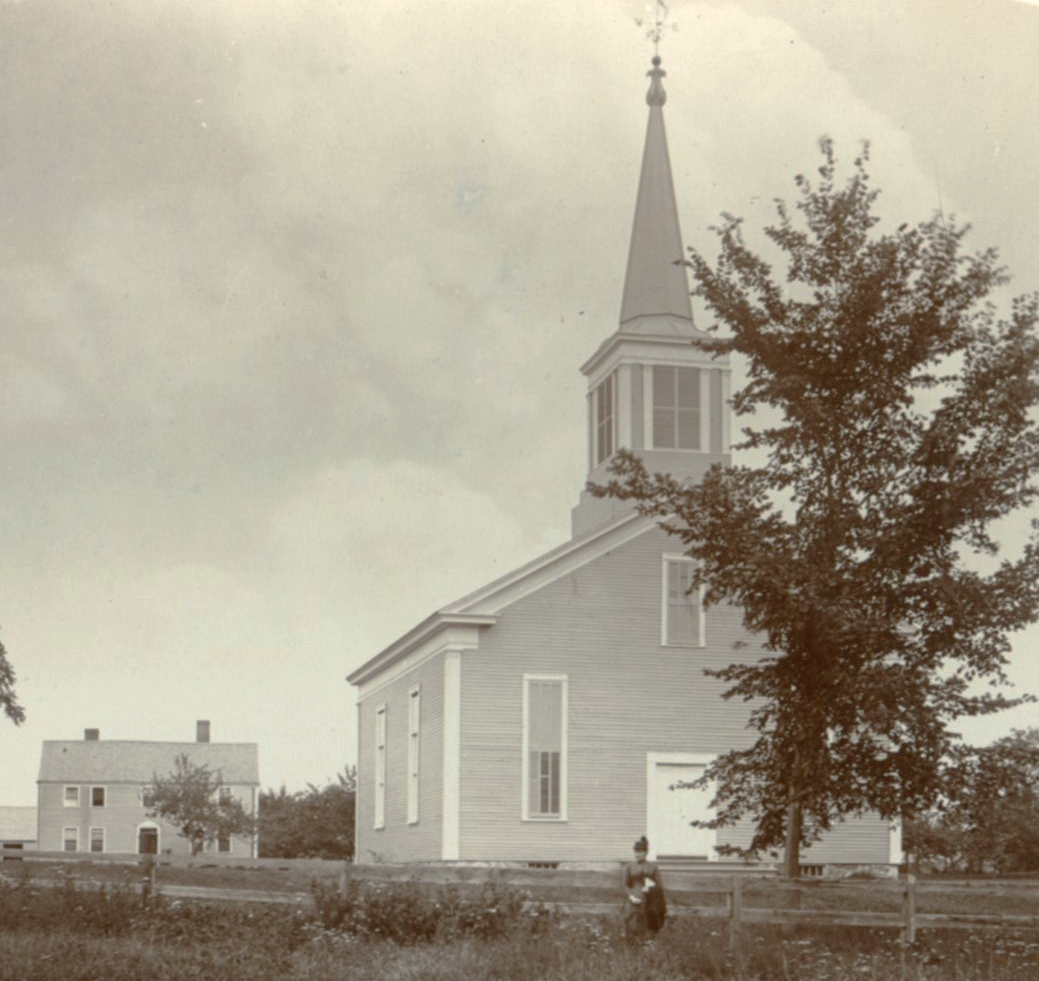
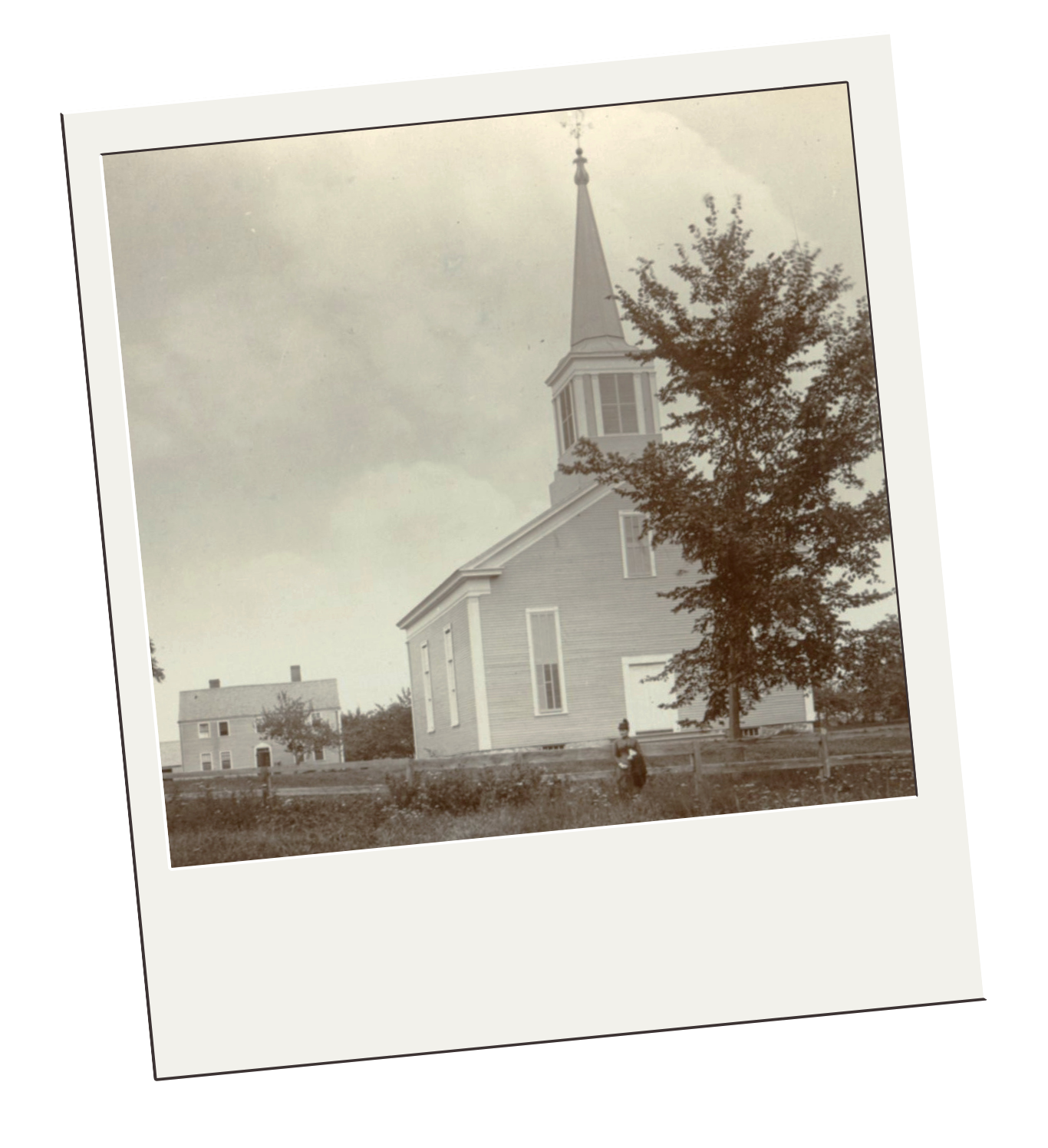
This undated photo was taken sometime between 1874 and 1892.
-
A parsonage was built for the use of the pastor and family, although it was never occupied by the Rev. Newmarch, who owned a house in town. Glass for the Parsonage, which was very expensive at that time, was donated by Sir William Pepperrell.
Today this building is the Parish House and is on the National Register of Historic Places.
THE fire
-
In 1730 the new meeting house burned to the ground during a violent thunderstorm.
That same year a new church was built and stands today as the oldest church building in continuous use in Maine.
A few interesting facts:
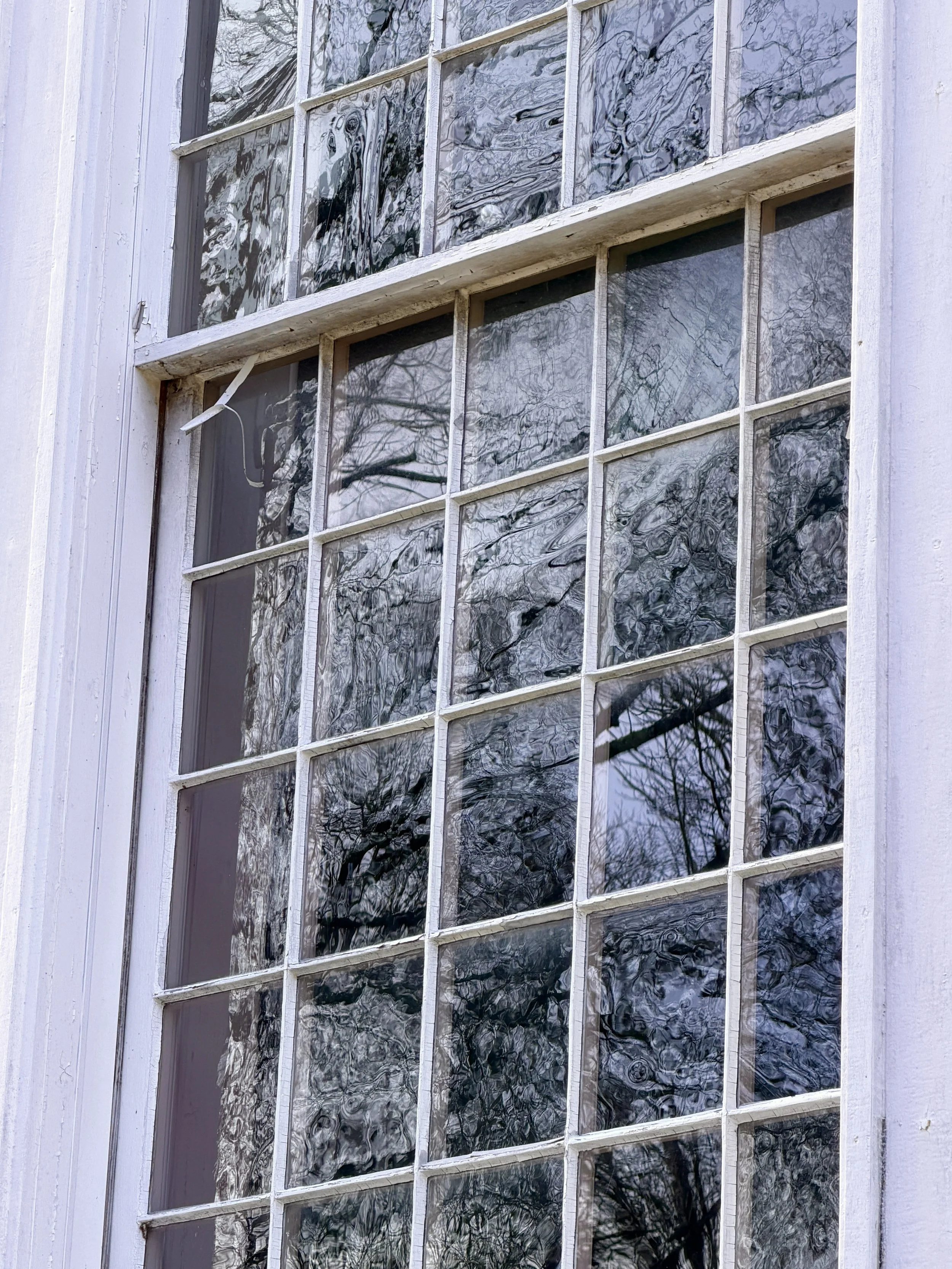
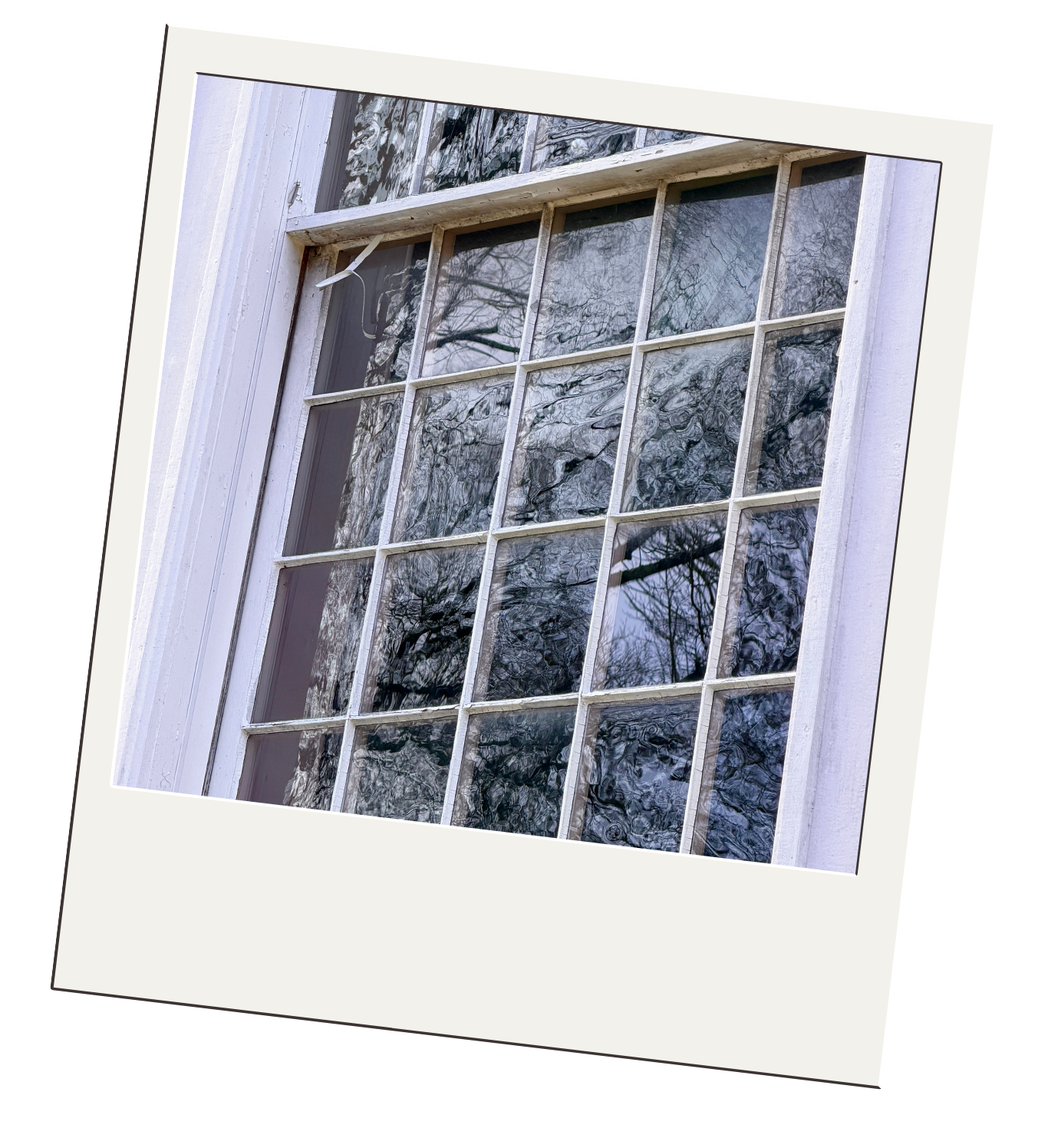
The windows contained over 1200 panes of glass, given by the Pepperrell family
The sexton was kept busy replacing panes that were broken when dogs, brought by worshipers to keep their feet warm and then left behind after service, jumped through the windows to escape.
Sir William Pepperrell’s widow, the Lady Pepperrell was a regular worshipper and had a box pew “lined with worsted and curtained, with a bear skin carpet on the floor in defense against the cold.” She is known for the Lady Pepperrell house, which she built after her husband’s death. It is also on the National Historic Register and stands today across the street from the church.
-
the Parish voted for a Singing Pew, to be in the “hinde seat but one”, which was probably the beginning of the choir
-
On the 300th anniversary of the church building, the windows were repaired and renovated with wavy glass, like the original glass
THE move
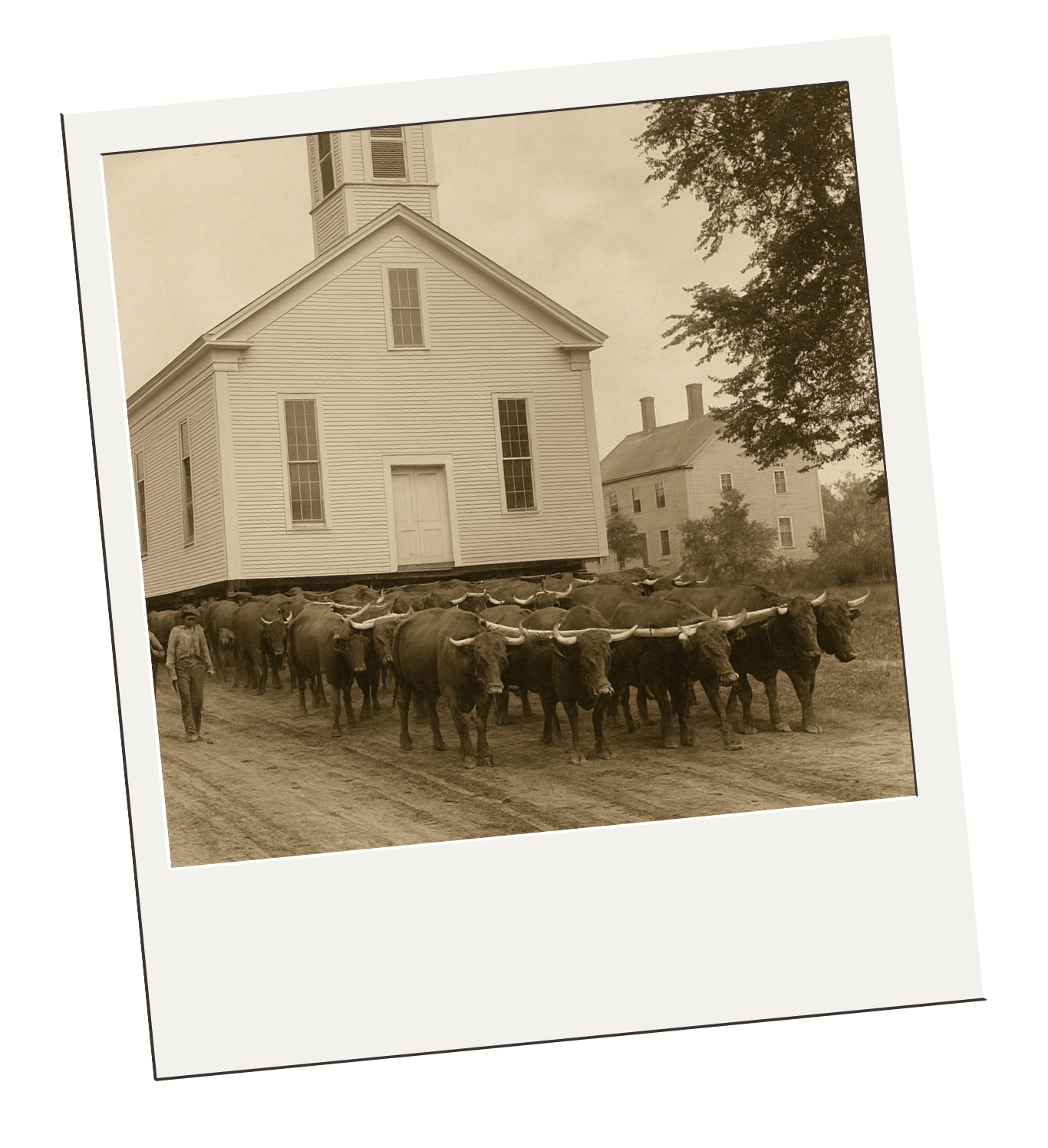
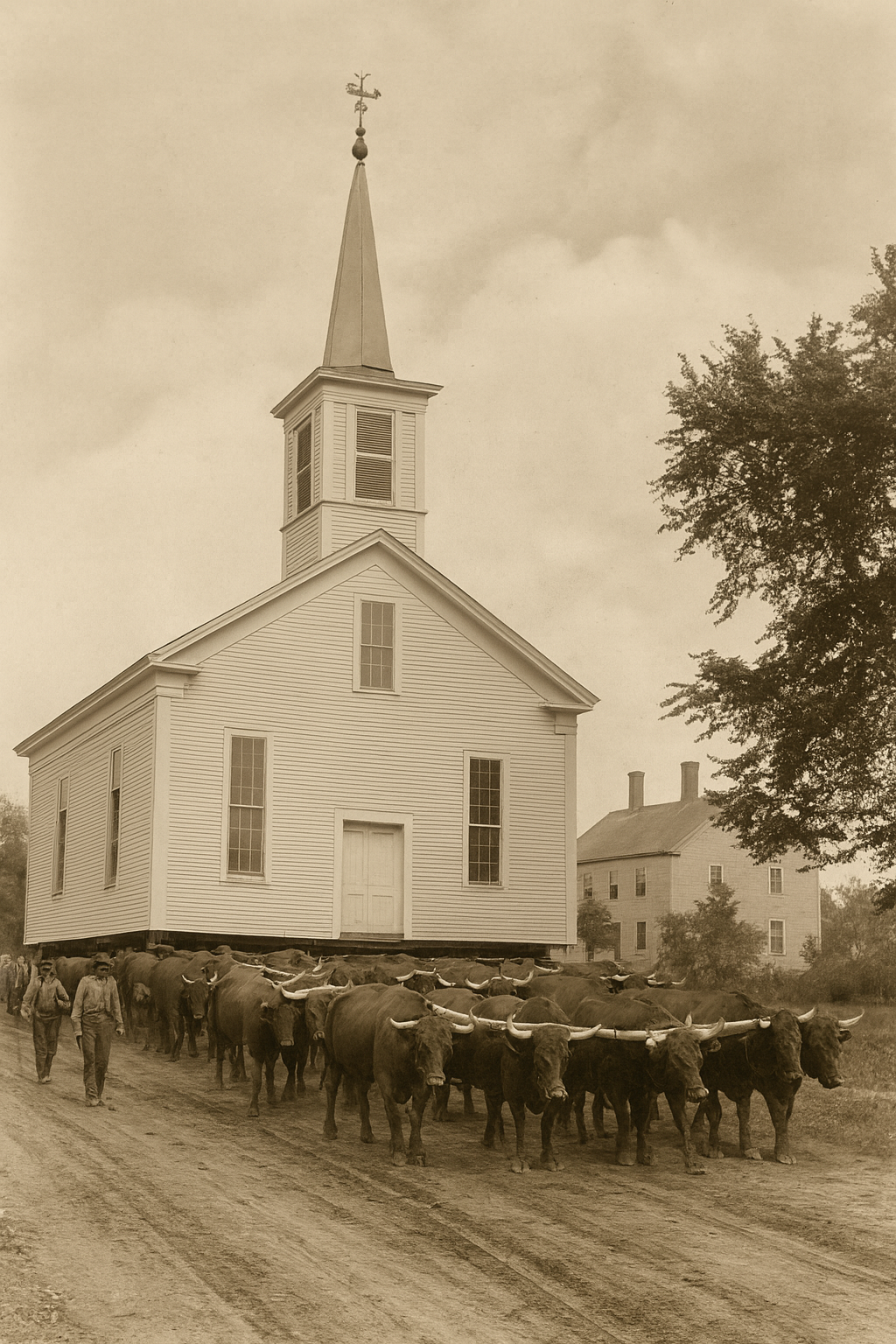
*Photo is a recreation (not historic)
-
The church was originally located closer to the Lady Pepperrell house, in the middle of what’s now Pepperrell Rd.
-
The town sent a letter asking to move the church so that the road could be widened and improved. After great consternation and much arguing, a contractor was hired to move it. Within a few days of the move date the contractor declared that he wouldn’t do it.
And so Levi Randall brought his oxen and moved the building back 100 feet. It’s assumed that this was done on rollers, and likely with several teams of oxen*. There are giant “eyes”, such as used in hook and eye latches. on all sides of the building that may have held the ropes, but not much more is known at this time about how it was done.
THE steeple
-
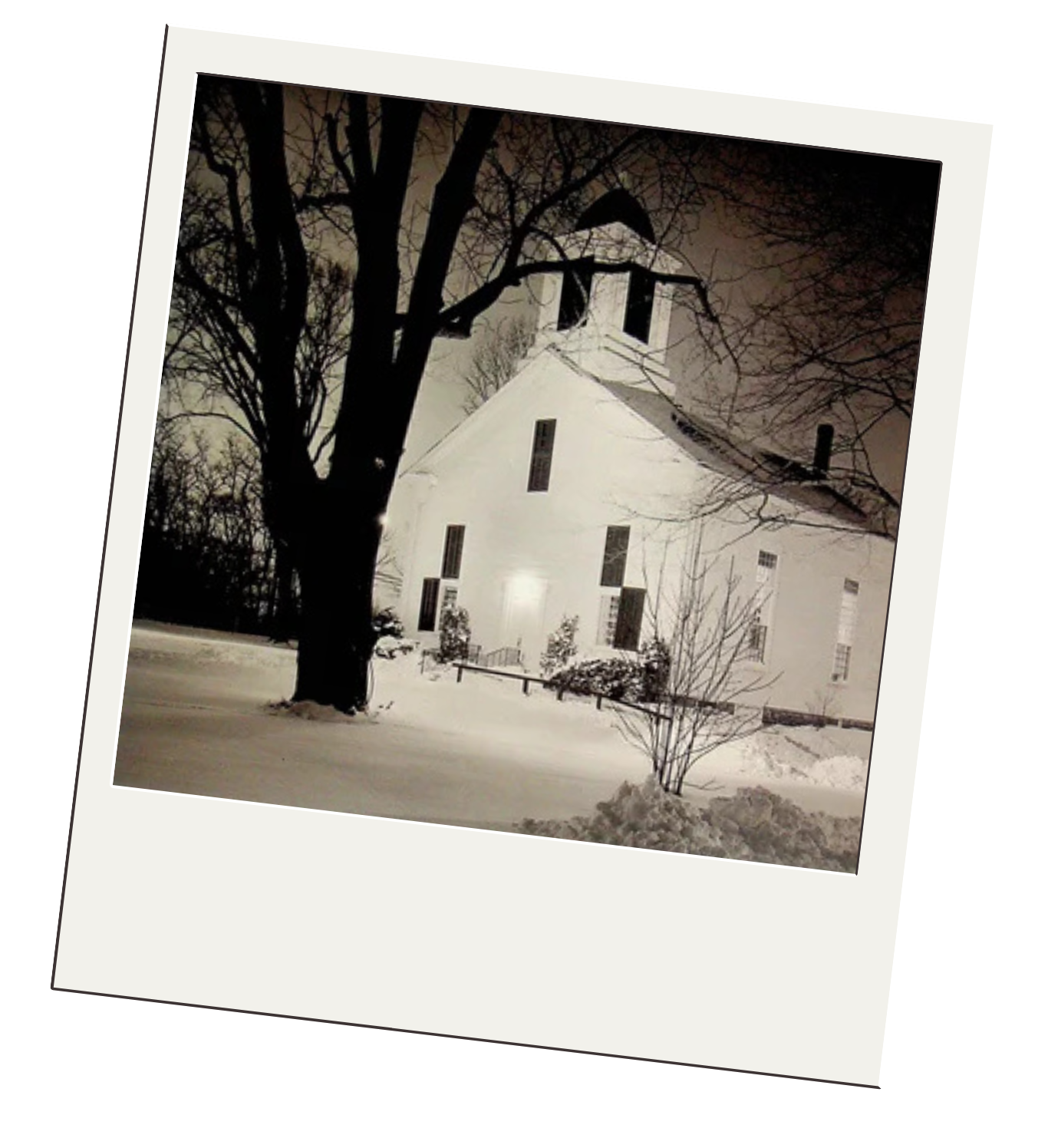
Like most New England churches, and certainly most iconic small town white wooden churches, the 1730 church originally had a tall, slender steeple. As often happens with tall objects, it was a magnet for lightning strikes.
-
We don’t know how many times it was struck, but in 1892 the insurance company refused to pay for another replacement after another lightning strike, and the current copper clad dome was installed.
THE bell
-
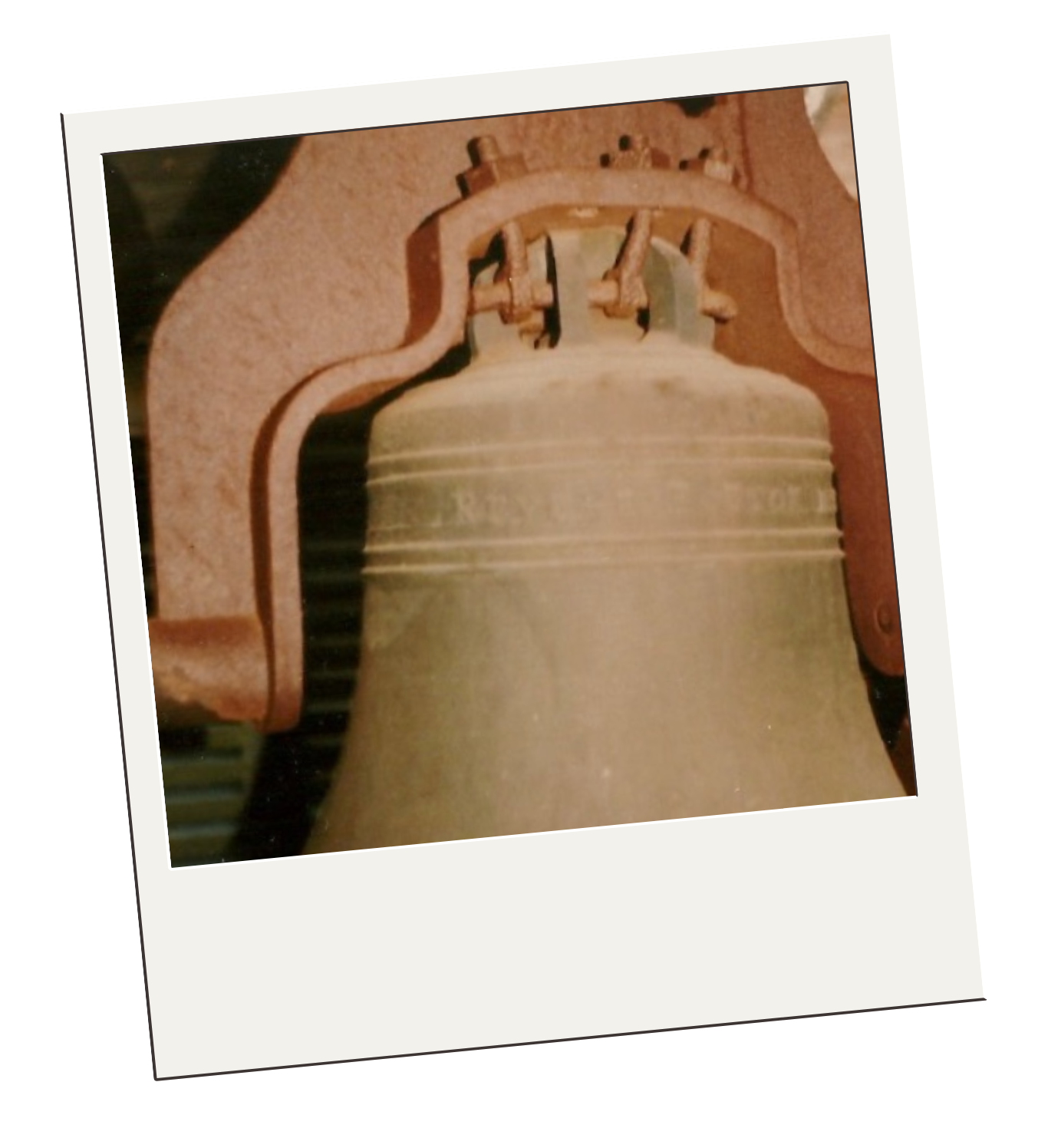
A bell was cast and brought from London for the original 1727 meeting house. After the meeting house burned in 1729, William Pepperrell agreed to send the ruins of the bell to London to be recast.
-
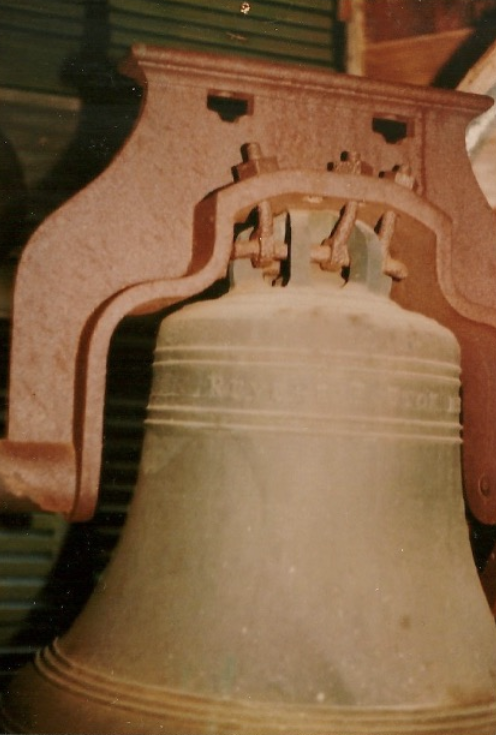
The bell was recast again in 1823 at the Revere Foundry in Boston, run by Paul Rever’s sons at the time, because relations with England had still not returned to normal after the War of 1812.
The bell stayed at the Revere Foundry for 3 years because the local economy was still badly damaged by the war, and the church couldn’t afford to pay for the repairs.
This recast bell remains in the belfry today and is rung most Sundays.
-
According to the reminiscences of Wm. A. Brooks, provided to his great great nephew Charlie Brooks, sometime in the mid-1800’s the young boys of the congregation would try to
“get the key of the church the night before the Fourth and get in to ring the bell just at midnight but we could not get it very often. However there were cellar windows. At noon we ring the bell The boys at Newcastle N.H. would ring their bell too. We were supposed to ring for 30 minutes. Newcastle would stop and wit (wait) until we stopped for a few minutes then they would start again. We would do the same several time so as to have the last ring.”
THE silver
-
The Rev. William Briggs served as minister from 1798 – 1814 but he may not have been the best, either at record keeping or at his job. Many church records are missing and what’s available show:
He only observed communion once
There are no records of spiritual work: no weddings, no funerals, no members added
There are many pages of dismissions as members left to join other churches
Membership dropped to 3 by 1810 and to 1 by 1814
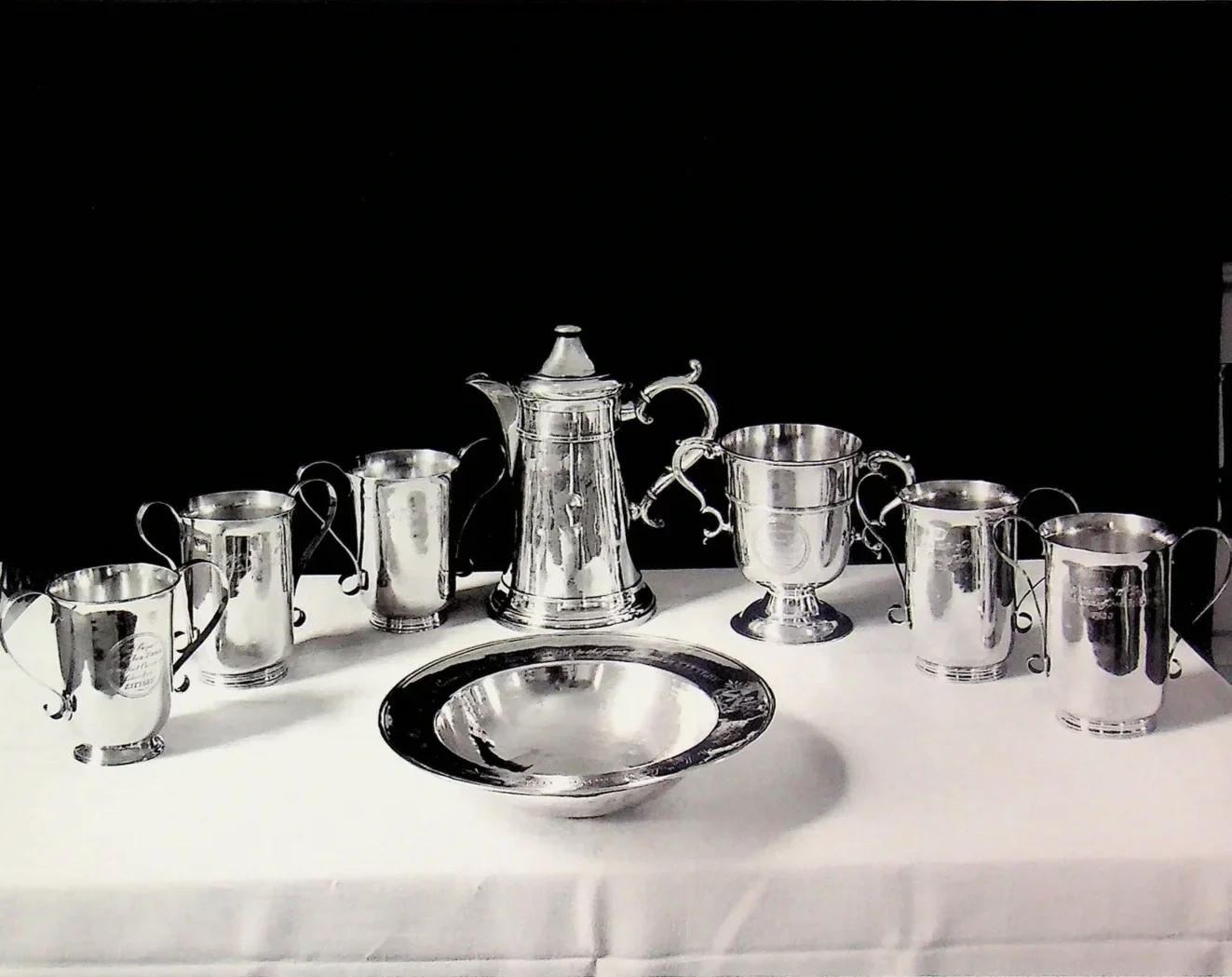
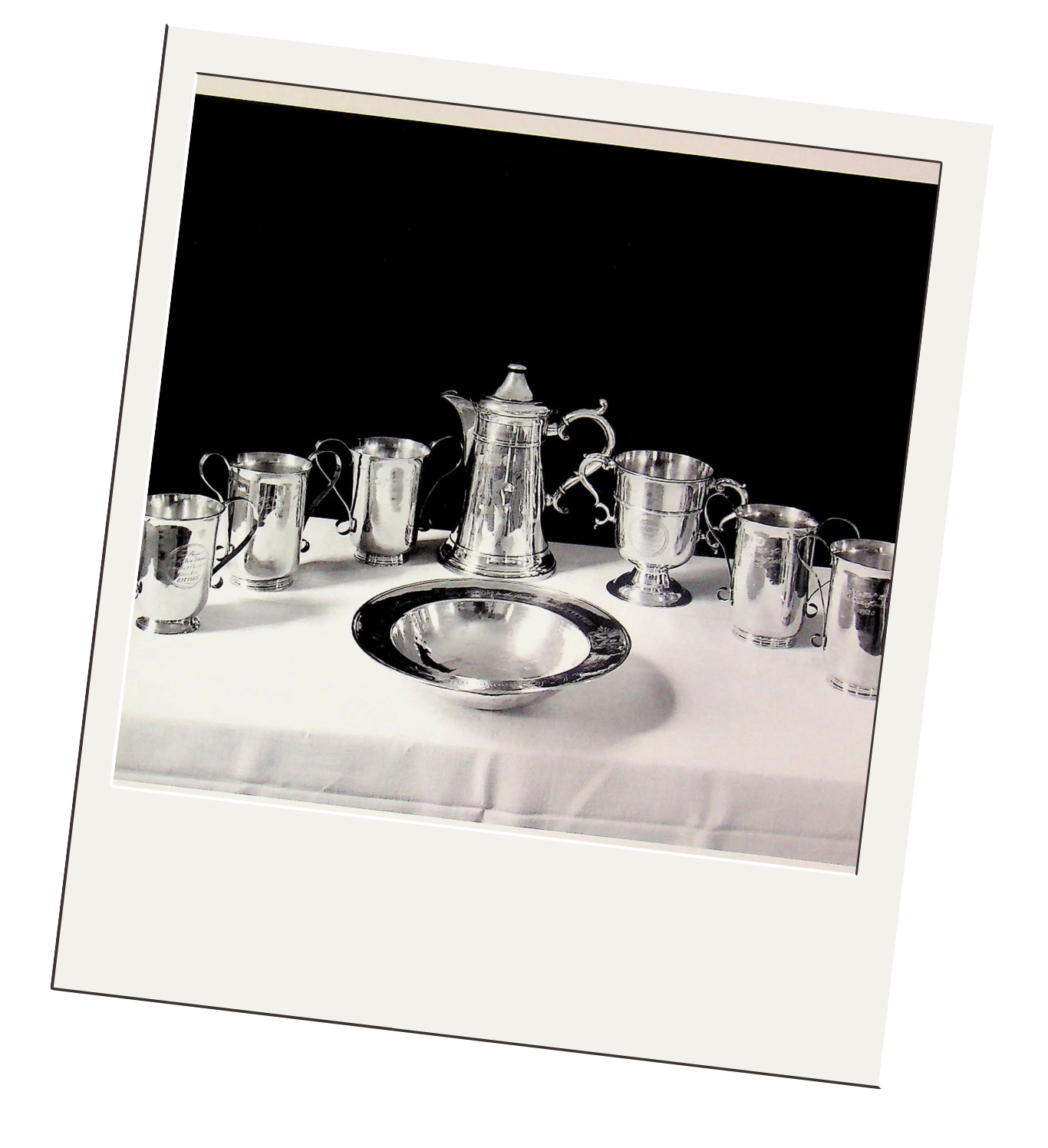
Rev. Briggs claimed the church owed him $800 and rumor had it that he intended to take the church silver as payment and leave. He was using it in his kitchen at the time.
The story is that Mrs. Tamsen Haley Bellamy, the sole member, went to his kitchen, scooped the silver up in her apron and fled with it to a safe place. The silver is now housed off site in a safe deposit box and is certainly not used as tableware!
The galleries
-
Recent research has revealed a long-neglected part of this church’s history: the presence of Black persons, enslaved and free, in the early congregation.
Here in the 18th century, like most elsewhere in New England, almost all Black residents were held as slaves in white households and businesses, although the designation typically used was “Servants for Life”.
Even ministers held enslaved persons, in fact an enslaved person was often offered as part of a minister’s compensation. Before 1783 brought a gradual ending to the practice of slavery in Kittery and the rest of Massachusetts, at least 29 Blacks had established a relationship with this church either through baptism or membership. About 79 others also likely attended services. A few Blacks did gain their freedom during that time.
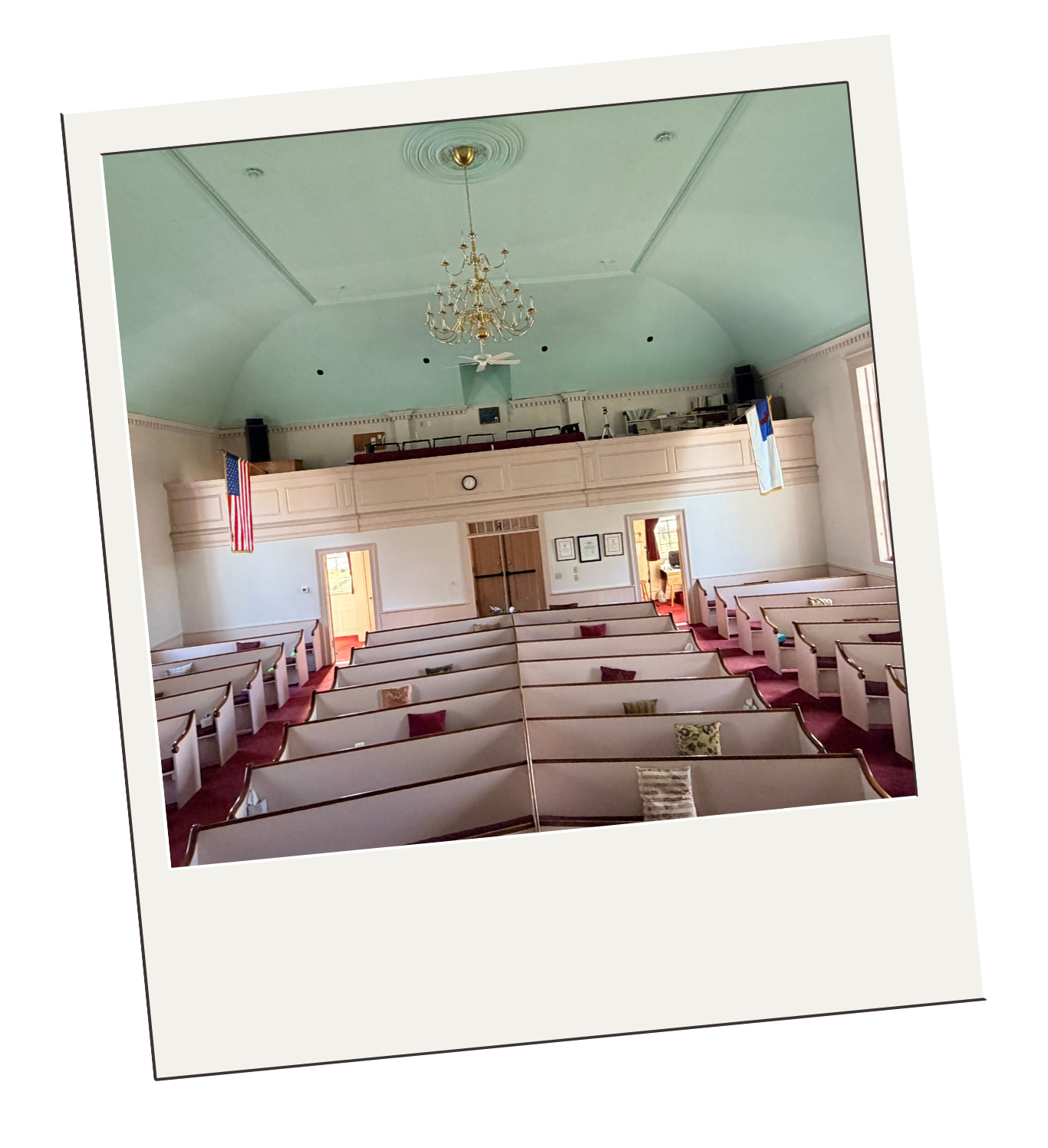
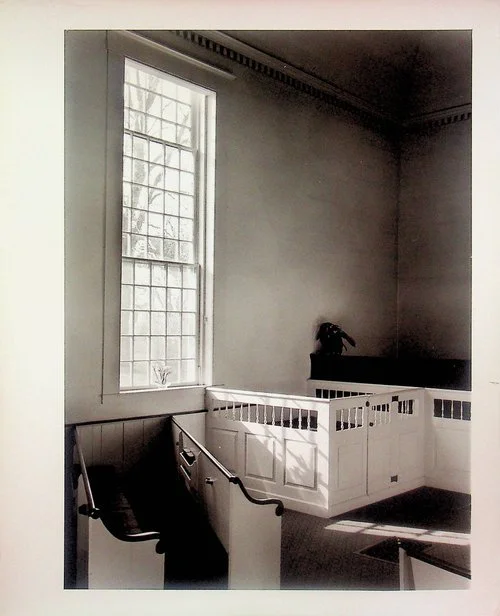
There were originally galleries on 3 sides of the Church where the enslaved people sat for service, likely sweltering in summer but possibly warmer in winter than those below in the boxes and pews.
Two of the three galleries were removed during a renovation in 1840.
The renovations
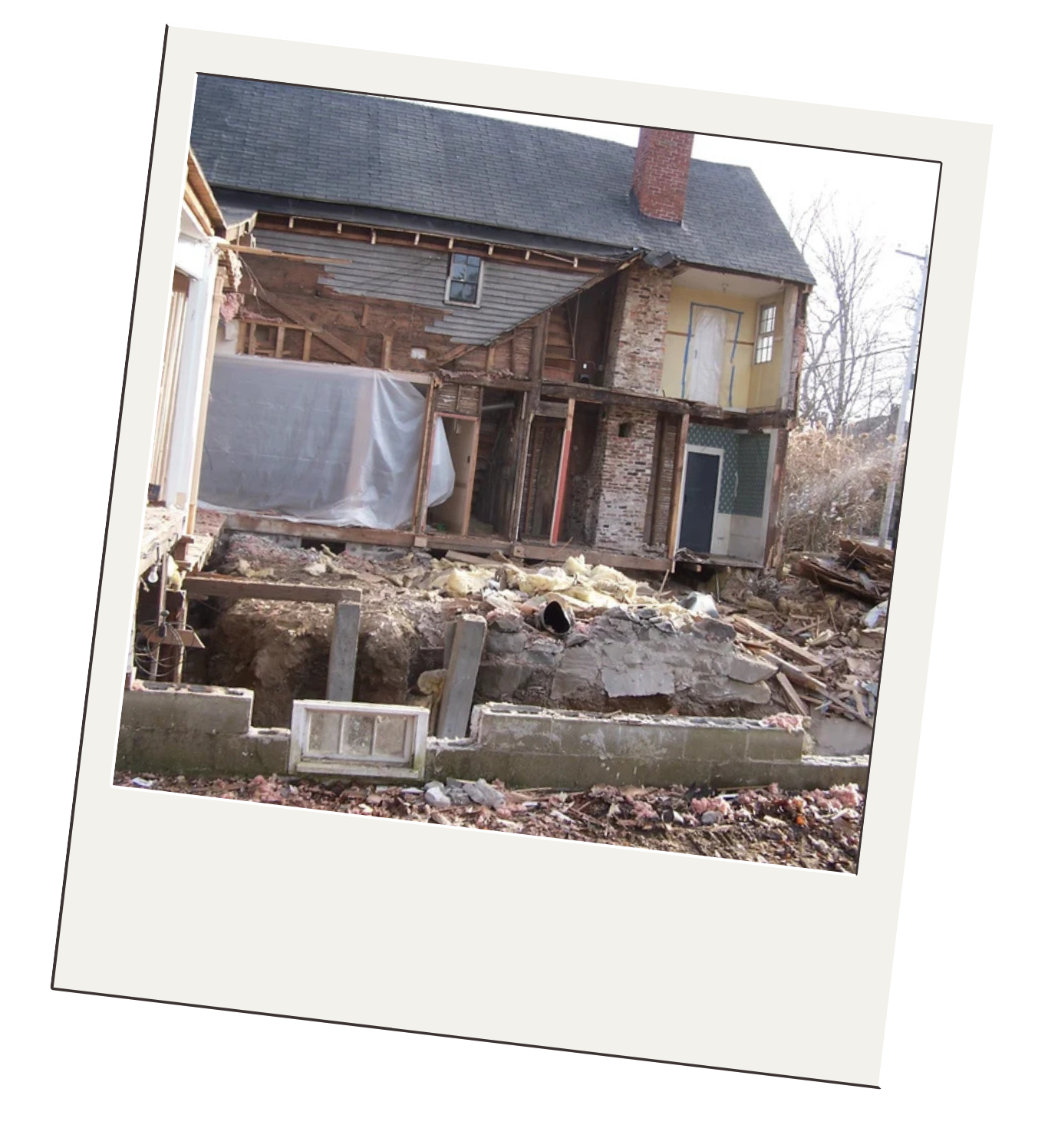
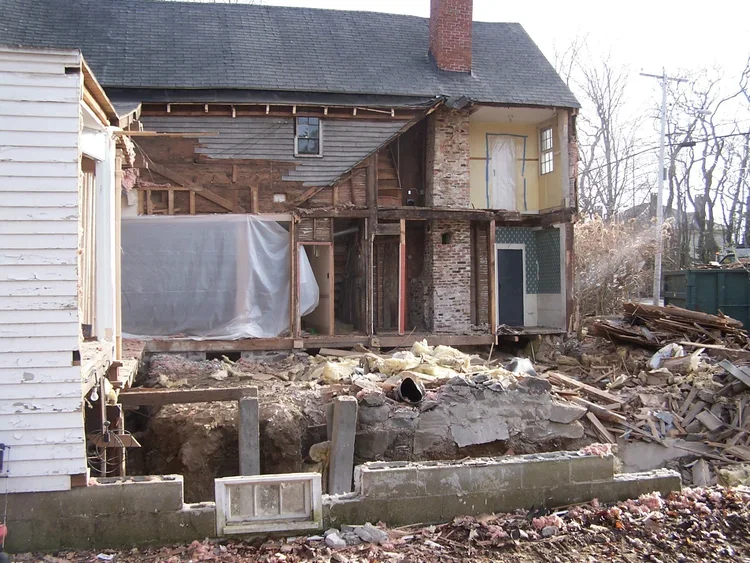
Photo from 2005 renovations of Parish House.
-
After the War of 1812, which devastated the local economy, the church was neglected until 1840, when the congregation borrowed money to renovate and modernize it.
At that time, 2 of the 3 galleries, which had been used as seating for enslaved people, were removed, as was the original 1730 pulpit and the box pews. Being true New England Yankees, the pulpit and box pews were not destroyed or discarded, but stored in R. F. Gerrish’s hay barn, then moved to his barn. These might still have been destroyed or damaged, if not for the actions of 2 teenage boys who created a block and tackle system and hoisted them to the loft, away from the carriages being backed into the barn by horses.
Also, during this renovation the door was moved from the long east wall to the narrower south wall, where it remains, and bench pews were added to replace the box pews, which also remain and are as uncomfortable today as they were in 1840.
-
Near Christmas 1908, the Sexton was checking the building when a gas light fell from the ceiling and started a fire. The exterior of the building was unharmed, but the inside needed significant repair and renovation; one pew still shows burn marks.
The renovation was undertaken by John M. Howells, a well-known architect and son of William Dean Howells, the author.
As part of the renovation, he created an acoustically superior ceiling, brought back 2 box pews, including Lady Pepperrell’s, and the original 1730 pulpit, all of which are in use in the church today. This is possibly also when the stained-glass window was added and 2 long windows that had been behind the pulpit were removed.
The exterior was painted many times over the years and has been several different colors, not just the classic white painted wood of today.
Around this time a new Parsonage was built, and the Old Parsonage became the Parish House, which was and still is used for meetings and Sunday School.
-
Additions and Renovation:
During World War II the Navy Yard went to three shifts, and the town’s population surged. The Parish House was used as a public school and called the Benjamin Stevens Community House.
Post World War II the Sunday School grew to 200 students, and the Parish House needed to be enlarged to house them in the 1940’s and again in the 1950’s. A major renovation of the Parish House was completed in 2005.
The library
-
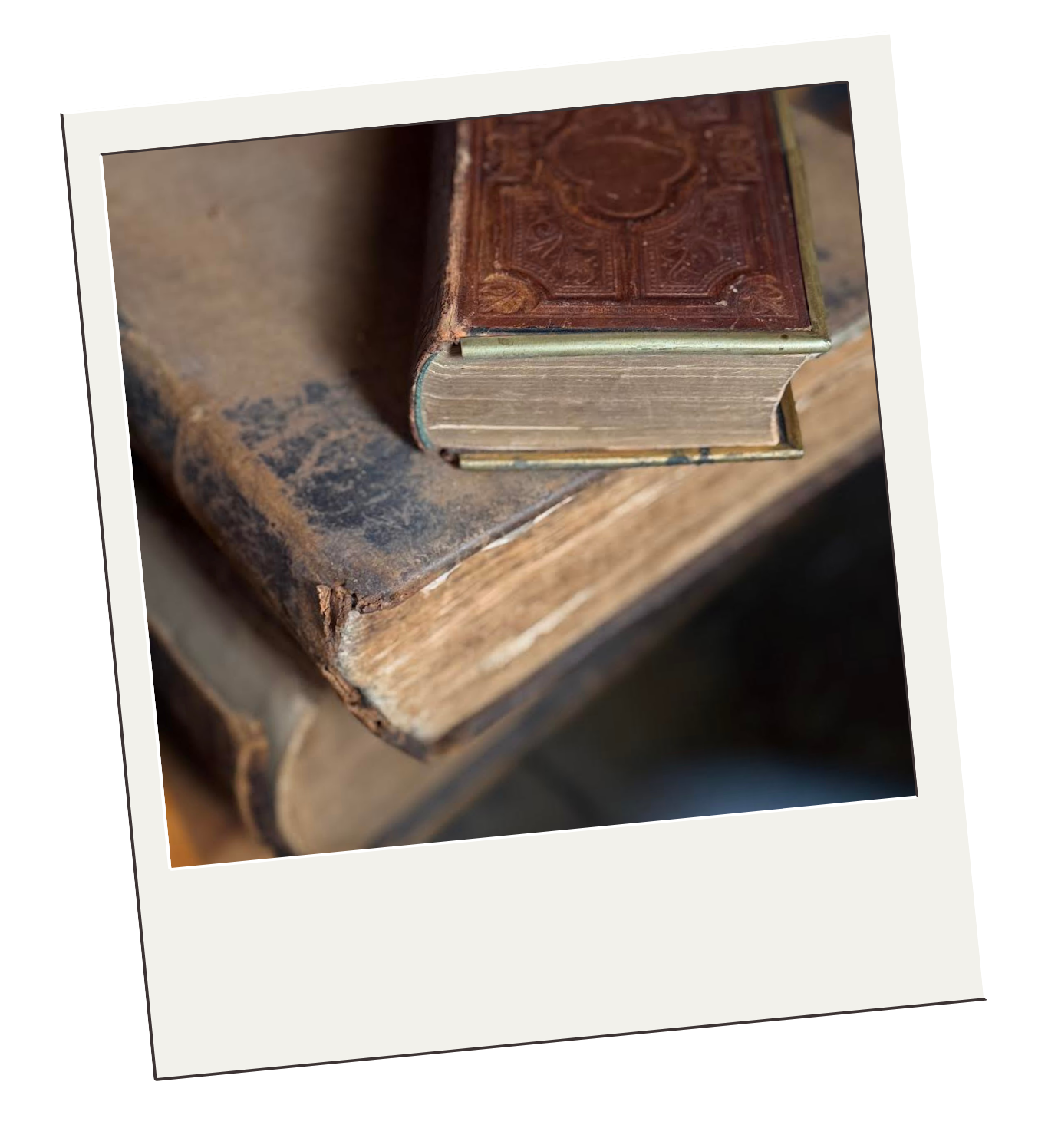
A circulating library was set up for the purpose of “removing from younger minds certain religious prejudices,” and to combat illiteracy and moral delinquency. The books came from concerned members and other libraries.
-
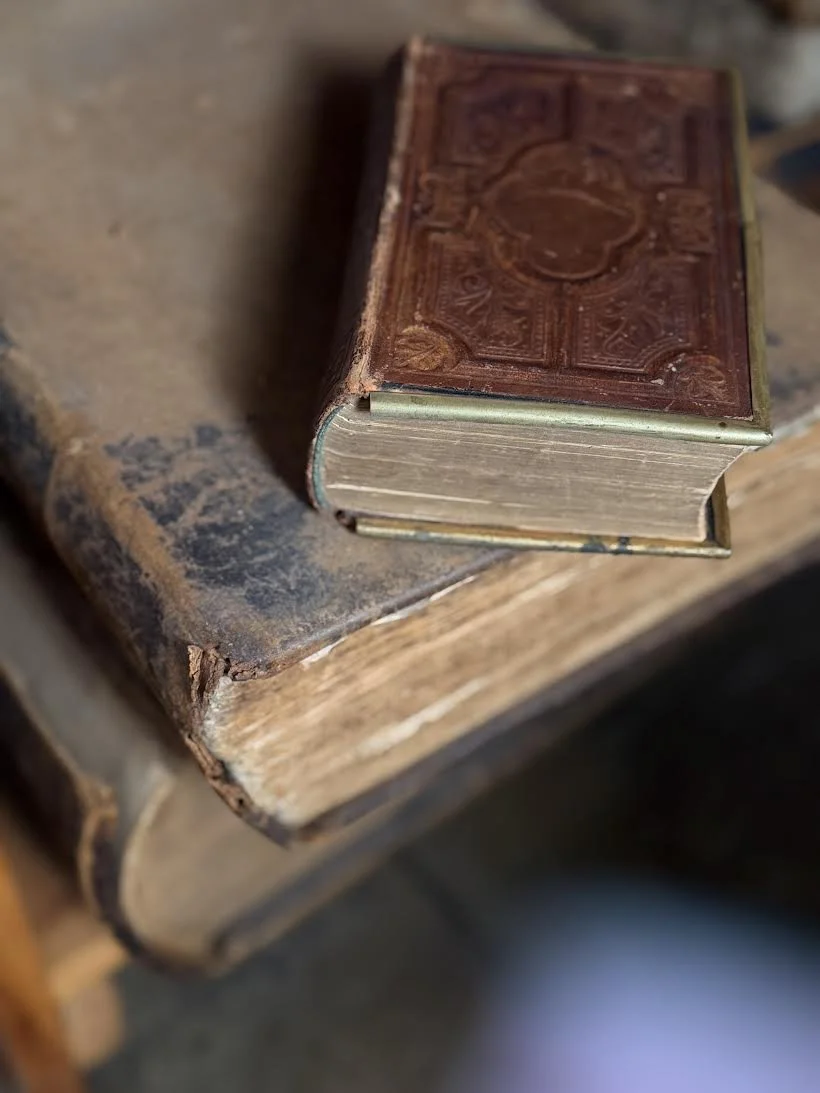
These books, along with the Pepperrell Library and others left to the church by Dr. Stevens (minister from 1751 to 1791) are now on permanent loan to the Portsmouth Athenaeum.
The cemetery
-
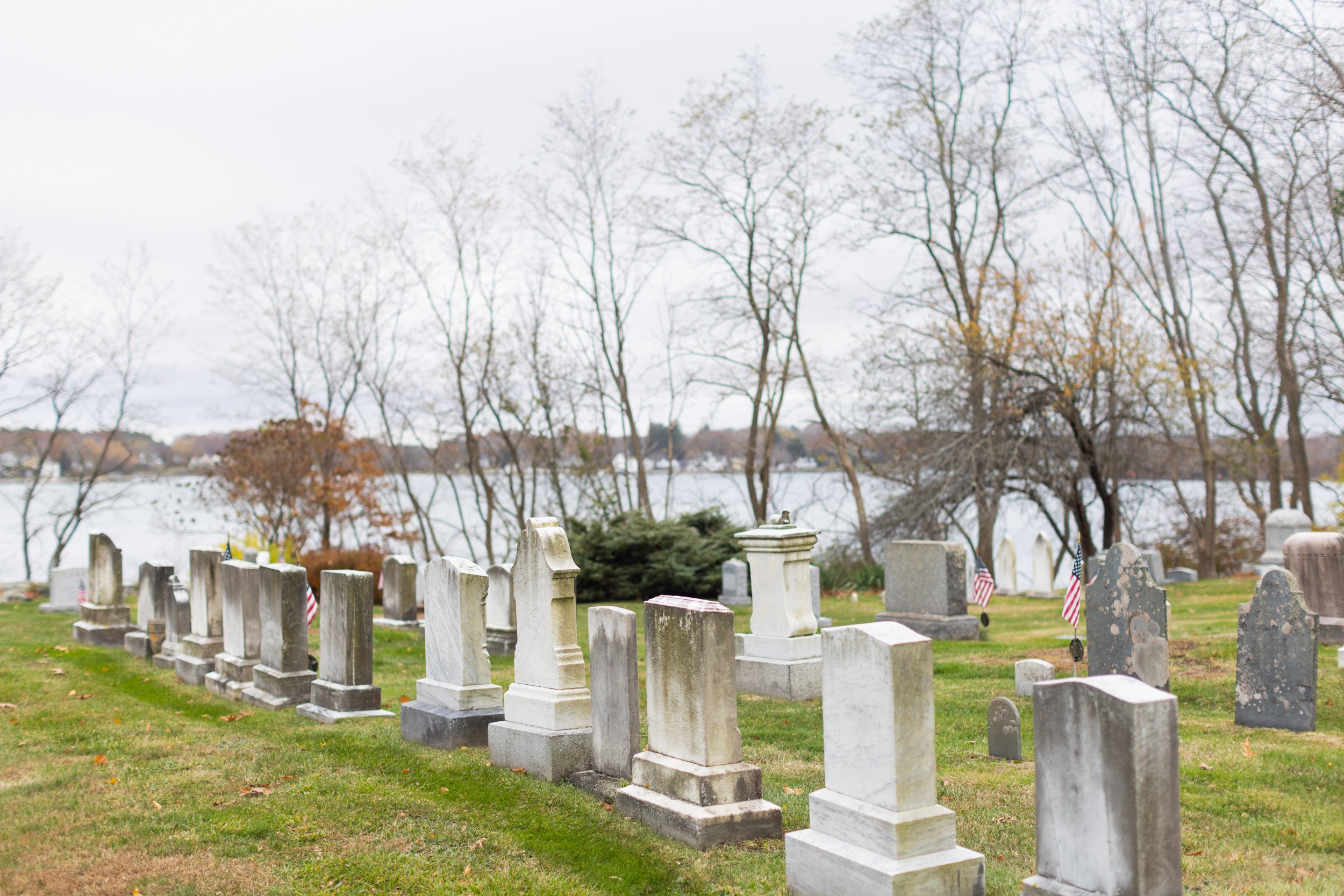
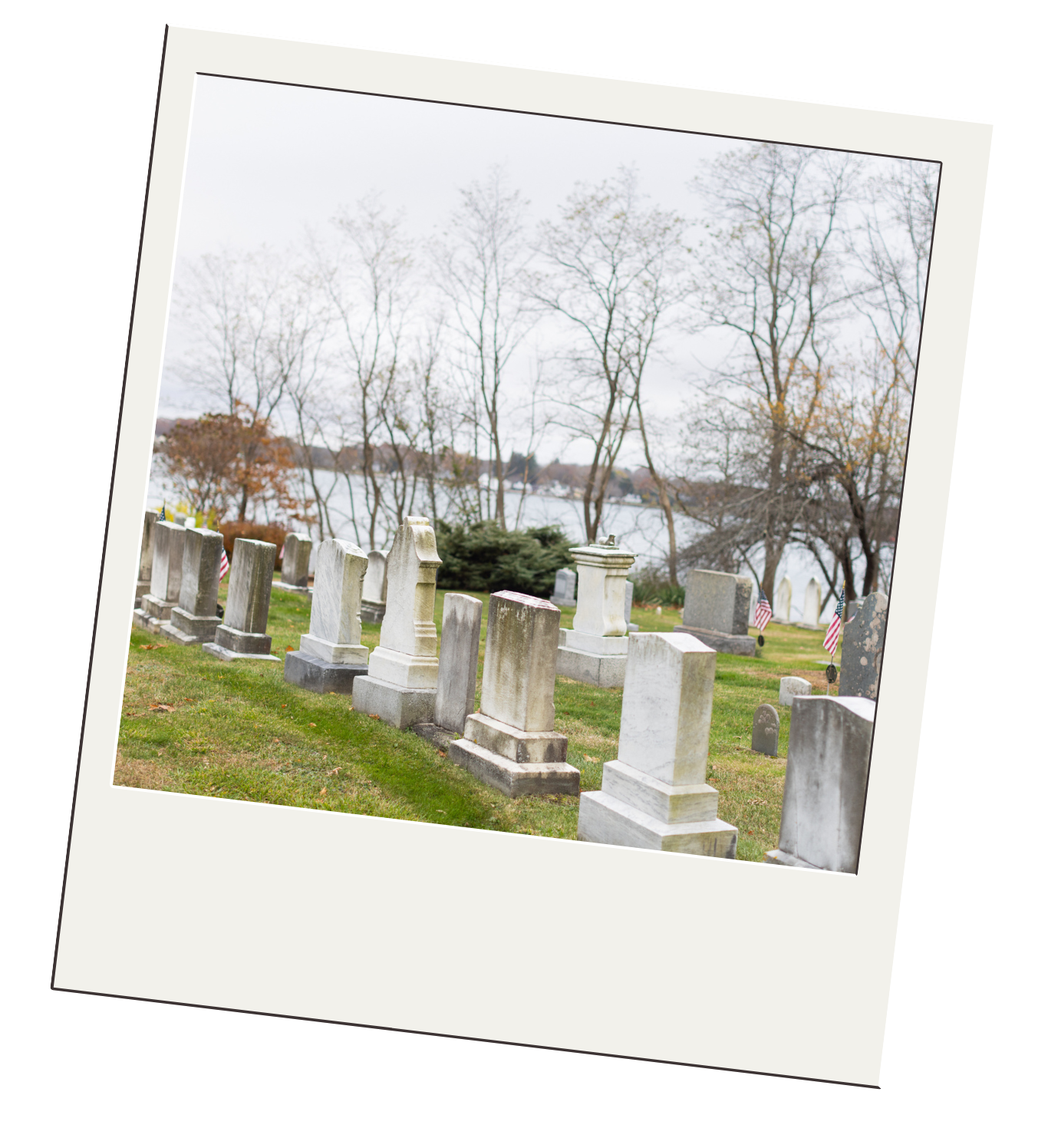
The Old Burying Ground, just across the road, has been in existence as long as the church.
During the very early years, private home cemeteries were preferred, however over time the church cemetery was used more frequently, until it became necessary to charge $2.00 for a lot, and it was required that enough dirt be brought to cover the casket.
Many of the unusual stones in the cemetery are sought out for stone rubbings.
-
The graves of several of our ministers are to be found here, including Rev. John Newmarch, Dr. Benjamin Stevens, Rev. M. C. Bartley, Rev. John Graham, Rev. Edward H. Newcomb and the Rev. Roderick A. MacDonald.
Other recognizable graves sites include the Thaxter family graves, Captain William Whipple, and the memorial stones for those lost in the shipwreck of the Hattie Eaton.
The most famous stone is for Levi Thaxter whose epitaph was written by poet Robert Browning. Levi Thaxter’s famed poetess wife, Celia, is buried on Appledore Island, not the Old Burying Ground, as is often assumed.
Capt. William Whipple was father of General William Whipple; near this grave are the family lots of the Cutts and Gerrish families.
Steeple stories
-
Reverend John Newmarch (1672-1754)
The first pastor of the First Congregational Church in Kittery. He graduated Harvard in 1690 and began his ministry in Kittery in 1695. He was ordained as pastor on the day that the church was first organized, November 4, 1714, and remained pastor of the church for 60 years. Upon his death in 1754 he was buried in Kittery Foreside, where he’d had a home. In 1936, his body was exhumed and brought to the Old Burying Ground, across the street from the church.
-
William Whipple (1731-1785)
A Founding Father and a signer of the Declaration of Independence as a Representative to the Continental Congress for the state of New Hampshire, he was born in Kittery and baptized at the church. He earned his fortune as a merchant and had been a slaveholder as well as a participant in the trade of enslaved people. After signing the Declaration of Independence he freed his enslaved servant, finding a contradiction between fighting for freedom while holding another in slavery.
-
Colonel William Pepperrell (1647-1734)
The father of Sir William Pepperrell and the first of the Pepperrell line to come to the Americas, emigrating from Devonshire, England in 1676. He established himself as a shipbuilder and landowner over the years. Colonel Pepperrell was one of the wealthiest men in the area and gave generously to the church over the years, including pieces of the Pepperrell silver, still owned by the church today.
-
Lady Mary Pepperrell (1704-1789)
The wife of Sir William Pepperrell. She built the Lady Pepperrell House across the street from the church a year after her husband’s death; the house is now on the National Historic Register. The Pepperrells were likely Loyalists, and her property was confiscated during the American Revolution, however it was restored to her, probably because of her husband’s actions in the Battle of Louisburg.
-
William A. Brooks
A resident of Kittery whose “Reminiscences of Boyhood Days” was donated to the church by his great, great nephew Charlie Brooks. It’s thanks for William and his great, great nephew that we know of the bell ringing exploits of the boys of Kittery and New Castle on July 4ths past and how the box pews and pulpit were saved to be returned to the church in a later renovation
-
George Washington
George Washington toured the country in 1789 after becoming president and crossed the river from Portsmouth to visit with the church’s minister, Rev Benjamin Stevens. They had lunch together and invited Lady Pepperrell to join them. She declined, likely due to ill health. She died later that year. It was his only known visit to Maine.
-
The Story of the Quilt
In 1997 a group of volunteers created a community quilt for use on the communion table. This quilt tells the story of 55 families intertwined in 73 different pieces of material. Those who provided material were asked to also provide the story of the fabric and why it was special. The quilters realized, as they pieced the quilt together, that there were themes evolving. Themes of family, memories, weddings, babies, family linens, tartans, and as part of the project, new memories. The quilt is still used during our monthly communion service.
-
Sir William Pepperrell (1696-1759)
The son of Colonel William Pepperrell, is the only American to receive a British Baronetcy, allowing him to be referred to as Sir William Pepperrell.
Sir William was the younger son and not expected to take over the family business, until his older brother died in 1713. He expanded the business and holdings and was at some point reputed to be one of the richest men in America. He was the first American to be commissioned a lieutenant general in the British army and in 1745 he was asked to lead an expedition to take the fort at Louisburg, Cape Breton, held and heavily fortified by the French. Pepperrell raised, provisioned, and trained 4,500 men to lay siege to the fort. After a 7-week siege, the French flew a white flag and the fort was taken. This great victory led King George II to grant him a baronetcy.
Sir William was also a slave holder and may have traded in human slavery as well. His son-in-law is known to have been involved in the purchase and transport of enslaved persons, financed by Sir William, so even if Sir William was not directly involved in the trade, he was active in financing the trade.
Want to learn even more?
Visit our archives for an even deeper and more detailed history of our church. We also have an audio tour of our historic church too! Please use link below.